

NEWSLETTER

Sign up to read weekly email newsletter

Africa Science Technology & Innovation News

logo logo
Donate
Search
  • Home
  • News
  • Environment
  • Health
  • Development
  • Videos
  • Podcast
Reading: Nigerian Ophthalmologists Call for Solar-Powered AI Tools in Primary Eye Care
Share
Font ResizerAa
AfricastiAfricasti
  • Home
  • News
  • Environment
  • Health
  • Development
  • Videos
  • Podcast
Search
  • Home
  • News
  • Environment
  • Health
  • Development
  • Videos
  • Podcast
Follow US
Made by ThemeRuby using the Foxiz theme. Powered by WordPress
Africasti > Blog > Artificial Intelligence > Nigerian Ophthalmologists Call for Solar-Powered AI Tools in Primary Eye Care
Artificial IntelligenceHealthNews

Nigerian Ophthalmologists Call for Solar-Powered AI Tools in Primary Eye Care

Last updated: September 10, 2026 1:27 pm
By Africasti
Published: September 10, 2026
Last updated: September 10, 2026
3 Min Read
Share

The Ophthalmological Society of Nigeria (OSN) has urged government authorities to rapidly embrace digital technology and deploy solar-powered artificial intelligence (AI) tools directly to rural health centres.

Confronted with a crippling exodus of specialist doctors, the Society is warning that the country’s worsening “brain drain” could dismantle eye care delivery.

​Speaking in Abuja at the conclusion of the society’s 51st Annual General Meeting and Scientific Conference (ASO 2026), OSN President Dr. Gloria Patrick-Ferife said that the society estimates that the migration of just a single ophthalmologist costs the Nigerian economy roughly ₦200 million (about $150,000) every single year in lost healthcare investments and workforce capacity.

Over 24 million Nigerians suffer from some form of vision loss, with conditions like cataracts, glaucoma, uncorrected refractive errors, needing glasses, and diabetic eye damage.

​Millions of citizens suffer needlessly from conditions that a routine checkup could catch and fix before permanent damage sets in.

​Yet 84 percent of these cases are completely preventable or treatable.

​Among Nigerians aged 40 and above, 4.2 percent are completely blind, a statistic driven largely by a lack of early detection, especially in remote areas.

​​With specialists concentrated in major urban centres and leaving the country in high numbers, patients in rural communities are often left without options.

The Society, therefore, calls for the adoption of solar-powered digital tools as a direct way to bridge this gap.

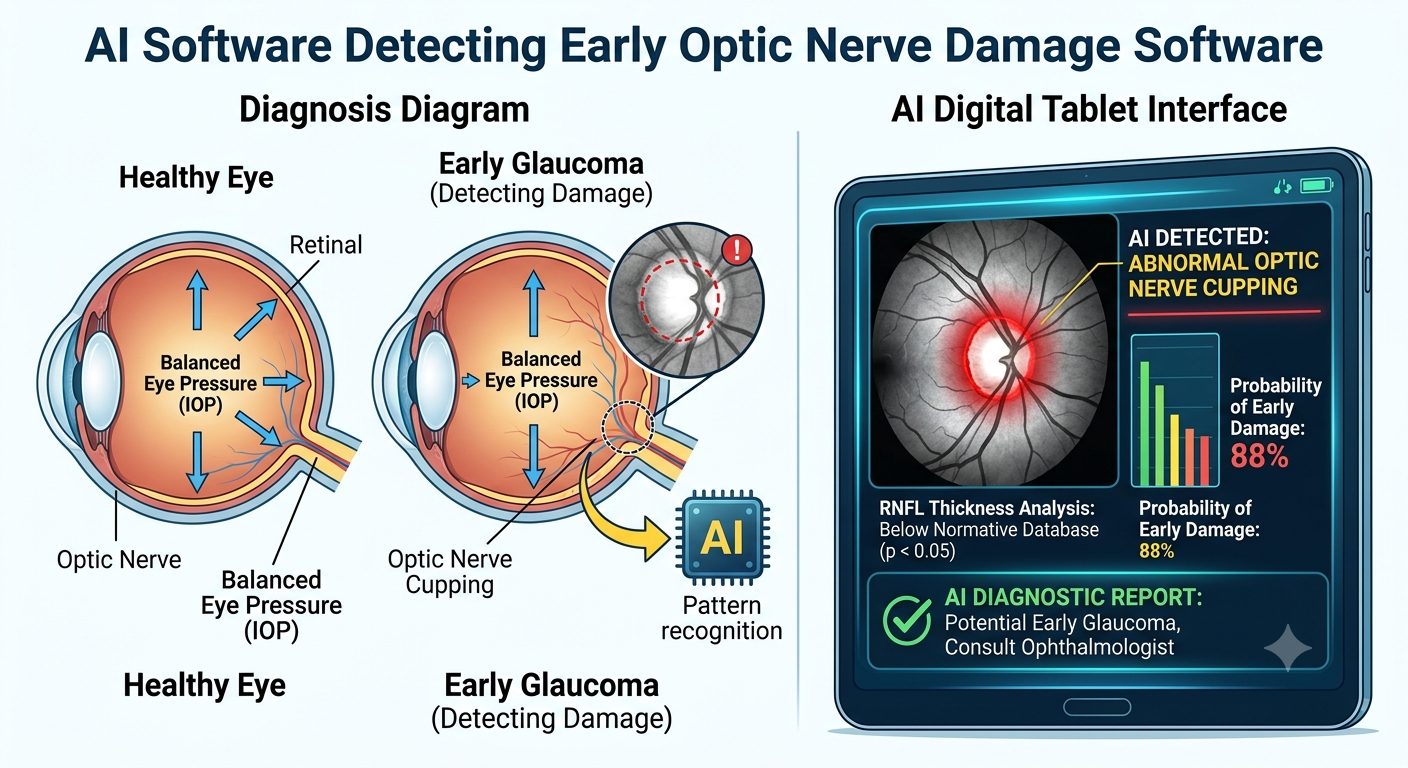
Dr. Patrick-Ferife said “​by placing handheld digital imaging devices and AI-powered diagnostic software in village clinics, community nurses can scan a patient’s eyes in seconds, allowing doctors in city hospitals to review the images remotely through tele-ophthalmology.”

​She, however, emphasised that technology must complement rather than replace human medical expertise.

​”How do we use technology to improve eye care without losing the human being at the centre of care?” she asked, stressing that federal, state, and local governments must address severe infrastructure bottlenecks, secure patient health data, and lower internet access costs so that digital eye care remains affordable for ordinary citizens.

​The society is also calling on the Federal Ministry of Health to integrate national eye-health data into the District Health Information Software (DHIS2) platform and add essential eye medications to the National Health Insurance Authority (NHIA) covered drugs list.


TAGGED:AIOphthalmologistPrimary healthcare

Sign Up For Daily Newsletter

Be keep up! Get the latest breaking news delivered straight to your inbox.
By signing up, you agree to our Terms of Use and acknowledge the data practices in our Privacy Policy. You may unsubscribe at any time.
Share This Article
Facebook Email Copy Link Print
Leave a Comment Leave a Comment

Leave a Reply Cancel reply

Your email address will not be published. Required fields are marked *

SUBSCRIBE NOW

Subscribe to our newsletter to get our newest articles instantly!

HOT NEWS

Nigerian Scientist Offers New Insight on Deployment of Space Tech for Environmental Sustainability

  A female Nigerian scientist has provided a new perspective on how space science and…

November 10, 2024

WHO Offers COVID-19, Ebola Support To Liberia

The World Health organisation (WHO) has reached out to Liberia with interventions aimed at saving…

August 24, 2023

Nigeria’s President Seeks Review of Country’s Space Programme

Nigeria’s President Seeks Review of Country’s Space Programme Nigeria’s President, Muhammadu Buhari, has urged the…

October 14, 2023

YOU MAY ALSO LIKE

Nigeria Get GM Potato Release Date

  Scientists hails outcomes of field trials Nigerian farmers have been told that the new potato varieties modified to withstand…

AgricultureNews
March 19, 2024

Ghana Makes GMO Debut With First Home-grown PBR Beans

Ghana has given official approval for the distribution of the Pod Borer Resistant (PBR) Cowpea seed variety to Ghanaian farmers.…

BiotechnologyNews
July 26, 2024

Nigerian Coalition Seeks Full Implementation of Executive Order on STI

  Science and Technology Advocacy Initiative, (SYNTECH) a coalition of NGOs has called for the full implementation of the Federal…

NewsScience & Tech
October 17, 2023

AATF Trains Nigerian Extension Workers, Others on Responsible Deployment of Agric Biotechnology

The African Agricultural Technology Foundation (AATF) has intensified efforts to strengthen the sustainability and responsible deployment of agricultural biotechnology in…

BiotechnologyNews
June 10, 2026
AfricaSTI
We use our own and third-party cookies to improve our services, personalise your advertising and remember your preferences.
  • Privacy Policy
  • Terms and Conditions
  • Facebook Policy
  • Contact

Follow US: 

AfricaSTI

Africa Science Technology & Innovation News

Suite 22, Angels Plaza, Ladoke Akintola Boulevard, Garki II, Abuja.
Tel: +234 9077799007

Welcome Back!

Sign in to your account

Username or Email Address
Password

Lost your password?