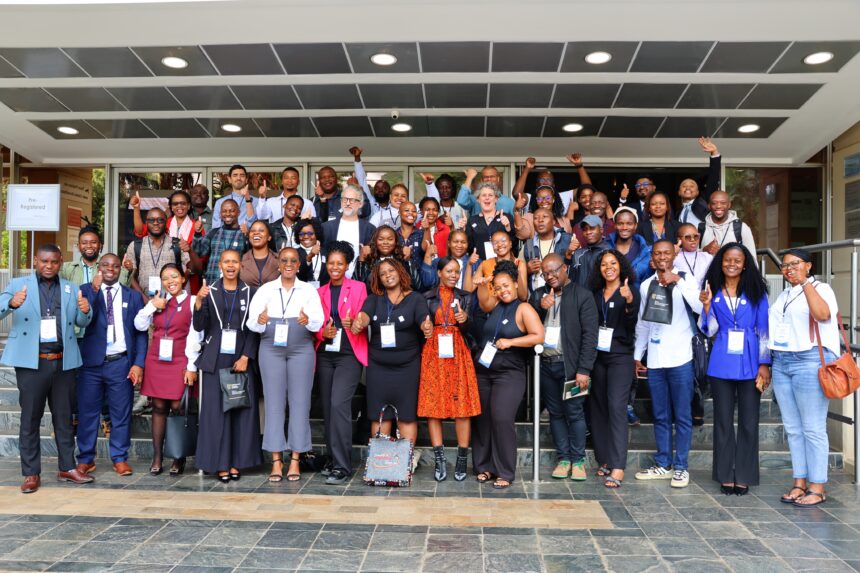
South Africa’s Minister of Science, Technology and Innovation, Professor Blade Nzimande, has declared open the 2025 World Conference of Science Journalists (WCSJ) at the Council for Scientific and Industrial Research (CSIR) Centre in Pretoria, marking the first time the prestigious global gathering is being held on African soil.
In his opening address, Prof. Nzimande described the event as a “profound honour” for South Africa and the continent, noting that it comes at a time of major milestones for Africa’s scientific and diplomatic visibility.
“The 2025 World Conference of Science Journalists is special in many respects,” he said. “It follows our successful G20 Presidency — the first ever hosted on the African continent — and coincides with the fourth anniversary of the SADC Science Journalist Training Course.”
The minister acknowledged the role of UNESCO, the South African Science Journalism Association (SASJA), the SADC Secretariat, and Stellenbosch University in nurturing regional science journalism capacity over the past four years. This year’s training programme, he noted, includes participants from over 12 SADC countries.
The 2025 WCSJ, themed “Science Journalism and Social Justice: Journalism that Builds Understanding and Resilience,” has drawn hundreds of delegates from across the world. The conference features three plenary sessions, 58 seminars and workshops, and 21 field trips, including visits to South Africa’s landmark science infrastructure such as the Square Kilometre Array (SKA).
Nzimande said the event not only showcases Africa’s growing science ecosystem but also reinforces the continent’s capacity to host major international knowledge platforms.
“This conference affirms our status as a preferred destination for global science dialogues,” he said. “It offers an opportunity to showcase South Africa’s science and cultural landscape to the world.”
Making reference to the theme of the conference, Prof. Nzimande praised its focus on social justice, saying it calls for journalists to explore how science can help tackle global crises — from inequality and pandemics to climate change and conflict.
He issued a strong appeal for vigilance in how emerging technologies, such as artificial intelligence (AI), are being deployed, citing reports of their use in conflict zones like Gaza.
“We are witnessing the use of AI not only for targeted killings of civilians, but also of journalists,” Nzimande said, referencing data from the International Federation of Journalists which reported over 248 journalists killed since October 2023.
“What is the role of science journalism in a world where nations continue to sell weapons to others committing genocide and human rights violations?” he asked pointedly.
Highlighting South Africa’s national commitment to science engagement, the minister underscored government efforts to make science accessible to all citizens. Through the Department’s Science Engagement Programme, the government seeks to promote science literacy and public trust in scientific research.
He revealed that television, the internet, and radio remain South Africa’s main sources of science information — reaching 60%, 52%, and 51% of the public respectively, according to the 2022 Public Relationship with Science survey.
To strengthen media capacity, the department has partnered with major outlets like SABC, News24, and Power FM, as well as 25 community stations, to provide young journalism graduates with practical experience in science reporting.
“We have placed over forty journalism graduates annually for the past two years, with the Department funding their stipends,” he noted.
This initiative, he added, supports South Africa’s broader G20 commitment to “Open Science” — as endorsed in the G20 Leaders’ Summit Declaration earlier in 2025.
Prof. Nzimande challenged participants at WCSJ 2025 to use their platforms to defend truth, equity, and ethical communication in science.
He urged delegates to reflect on how science journalism can Combat discrimination, stereotypes, and misinformation; Integrate technologies like AI without compromising journalistic integrity; Address disparities in media capacity between the Global South and North; and Serve as a bridge for science diplomacy and global solidarity.
“Science journalism has a vital role to play not only in building appreciation for science, but also in using science to create a just and humane world,” he concluded.
Declaring the 2025 conference officially open, Prof. Nzimande thanked local and international partners, including the CSIR, for their collaboration in hosting what he called “a historic and transformative event for Africa and the world.”