Agency Reassures Nigerians of Safety Measures, Strengthens Grassroots Awareness on GMOs Regulation
The National Biosafety Management Agency (NBMA) has reiterated that its mandate is not to halt or hinder biotechnology innovations in Nigeria, but to ensure their safe and beneficial application for national development, but to ensure a safe
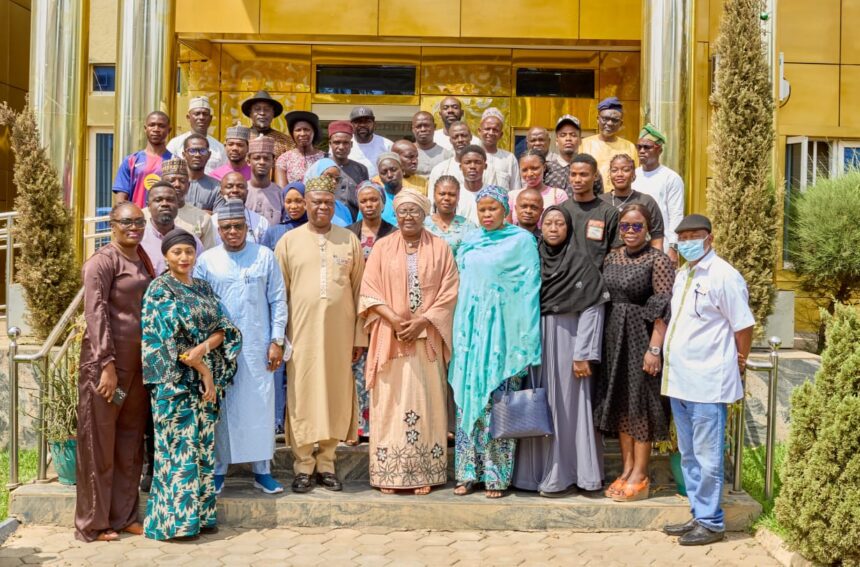
This was stressed during a Multi-Stakeholder Dialogue on Biotechnology and Biosafety held in Keffi, Nasarawa State on Monday, where the agency said it remains committed to protecting human and environmental health while promoting innovation that supports food security and sustainable agriculture.
Nigerian government has been under pressure from groups opposed to GMOs that want the approvals for GM crops introduced in Nigeria reversed, But NBMA and other bodies working together to ensure biosafety regulation in the country have maintained that there is substantial reasons to trust them.
This formed the crux of the conversation during the workshop, which drew participants from the farming community, academia, and the media, focused on addressing misinformation surrounding Genetically Modified Organisms (GMOs) and building public confidence in modern biotechnology through grassroots awareness and engagement.
The Acting Director of Biosafety Enforcement and Operations, Hauwa Tahir Ahmed, said the NBMA was established to regulate, not restrict, the use of modern biotechnology in Nigeria.
“The NBMA was not created to stop GMOs or innovation. Our role is to ensure that whatever biotechnology products are developed, imported, or used in Nigeria are safe for humans, animals, and the environment,” she explained.
Ahmed described modern biotechnology as a revolutionary tool that is transforming global agriculture through the development of crops with enhanced traits such as insect resistance, drought tolerance, and improved nutritional value.
However, she emphasized that regulation remains key to ensuring safety and public trust.
“Despite the many benefits, biotechnology must be properly regulated to prevent potential risks. That is why biosafety exists, to ensure safe use of GMOs while protecting biodiversity and human health,” she added.
According to Ahmed, all GM crops approved for commercial use in Nigeria have undergone rigorous risk assessments covering environmental impact, allergenicity, toxicity, and potential socio-economic effects.
She reminded stakeholders that under Sections 22 and 23 of the NBMA Act (as amended), no individual or organization is allowed to import, export, or carry out GMO field trials without the agency’s approval, warning that offenders face legal penalties including fines or imprisonment.
“Our approval process is science-based and internationally recognized. We work closely with research institutions, farmers, and regulatory partners to ensure transparency and compliance,” she said.
In her presentation, Mrs. Scholastica Bello, NBMA’s Director of Planning, Research and Statistics, traced Nigeria’s biosafety journey to 1992 when the country signed the Convention on Biological Diversity. S
Bello explained that the agency’s capacity was further strengthened in August 2019, when former President Muhammadu Buhari assented to the amendment of the NBMA Act, expanding its scope to cover emerging biotechnologies such as gene editing, gene drive, and synthetic biology.
“The amendment has positioned Nigeria to respond effectively to emerging scientific innovations and ensure biosecurity in line with international best practices,” Bello said.
Also speaking at the event, Dr. Bernard Ehirim, Programme Officer for Stewardship at the African Agricultural Technology Foundation, called on African countries to combat misinformation about biotechnology, warning that anti-GMO propaganda threatens food and nutrition security across the continent.
“Crops like TELA Maize and PBR Cowpea have undergone rigorous biosafety scrutiny. They are safe, and they hold great promise for African farmers battling pests and climate change,” he stated.
Ehirim said Nigeria’s approval of one cowpea and four maize varieties demonstrates the potential of biotechnology to improve yields and resilience, but stressed that public education and stakeholder cooperation are critical to maximizing the benefits.