

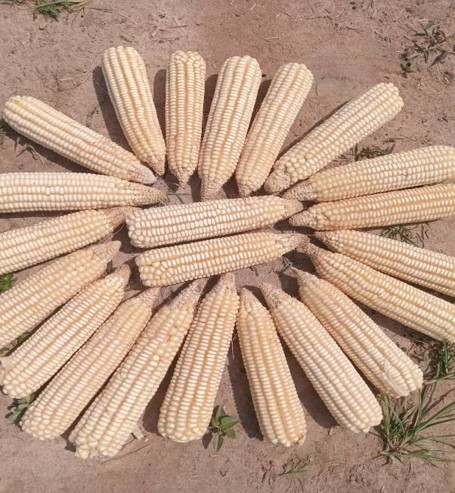
Agricultural experts have raised fresh concerns over growing campaigns discouraging African farmers from adopting improved seed varieties, warning that such narratives are worsening low productivity, deepening food insecurity, and recycling poverty across the continent.
The warning was delivered by Dr. Sylvester Oikeh, consultant on TELA maize with the African Agricultural Technology Foundation (AATF), during the annual stewardship training workshop for extension officers in Kaduna. He argued that resistance to improved seed technologies remains one of the major reasons Africa continues to record poor maize yields compared to global standards.
According to Oikeh, Nigeria cultivates about 6.5 million hectares of maize annually, yet average yield stands at only 2.2 tons per hectare — far below the global average of 5.8 to 6 tons per hectare. In advanced agricultural regions such as North America and Europe, maize yields often exceed 8 to 10 tons per hectare due to widespread adoption of improved seed varieties and modern farming techniques.
“Discouraging farmers from using improved seeds has effectively recycled poverty on the continent,” Oikeh declared. “When farmers replant harvested grain instead of certified seeds, they are planting what should be food, not seed. That single decision drastically reduces yield potential.”
He noted that many of the anti-improved seed narratives are ironically driven by interests from regions that heavily depend on advanced agricultural technologies for their own food production success.
“In Europe and other developed regions, improved seeds are central to agricultural productivity and food security. It is contradictory to promote a different standard for Africa,” he said.
Oikeh dismissed claims that improved seeds force farmers into dependency on multinational seed companies, stressing that the technologies are specifically designed to improve productivity, strengthen resistance to pests and diseases, and help crops withstand harsh environmental conditions.
Agricultural studies across sub-Saharan Africa support his position, showing that farmers who adopt improved maize varieties can record yield increases ranging from 30 to 100 percent, depending on environmental conditions and access to complementary inputs such as fertilizer and irrigation. Conversely, continuous recycling of harvested grain often results in declining yields due to genetic degeneration and greater vulnerability to pests and diseases.
The AATF consultant further observed that opposition to improved seeds has intensified with the introduction of genetically modified (GM) crops developed to combat major production challenges such as drought and destructive pests.
“Improved and GM seeds are not the problem — they are part of the solution to Africa’s food security challenge,” Oikeh emphasized. “Farmers are increasingly understanding the difference between grain and seed, and that awareness is critical for transforming agricultural productivity across the continent.”
With Africa’s population projected to rise significantly in the coming decades, experts warn that closing the continent’s widening yield gap will be essential to guaranteeing food security, boosting farmer incomes, reducing dependence on food imports, and driving sustainable economic growth.