

 The Ophthalmological Society of Nigeria (OSN) has urged government authorities to rapidly embrace digital technology and deploy solar-powered artificial intelligence (AI) tools directly to rural health centres.
Confronted with a crippling exodus of specialist doctors, the Society is warning that the country’s worsening “brain drain” could dismantle eye care delivery.
Speaking in Abuja at the conclusion of the society’s 51st Annual General Meeting and Scientific Conference (ASO 2026), OSN President Dr. Gloria Patrick-Ferife said that the society estimates that the migration of just a single ophthalmologist costs the Nigerian economy roughly ₦200 million (about $150,000) every single year in lost healthcare investments and workforce capacity.
Over 24 million Nigerians suffer from some form of vision loss, with conditions like cataracts, glaucoma, uncorrected refractive errors, needing glasses, and diabetic eye damage.
Millions of citizens suffer needlessly from conditions that a routine checkup could catch and fix before permanent damage sets in.
Yet 84 percent of these cases are completely preventable or treatable.
Among Nigerians aged 40 and above, 4.2 percent are completely blind, a statistic driven largely by a lack of early detection, especially in remote areas.
With specialists concentrated in major urban centres and leaving the country in high numbers, patients in rural communities are often left without options.
The Society, therefore, calls for the adoption of solar-powered digital tools as a direct way to bridge this gap.
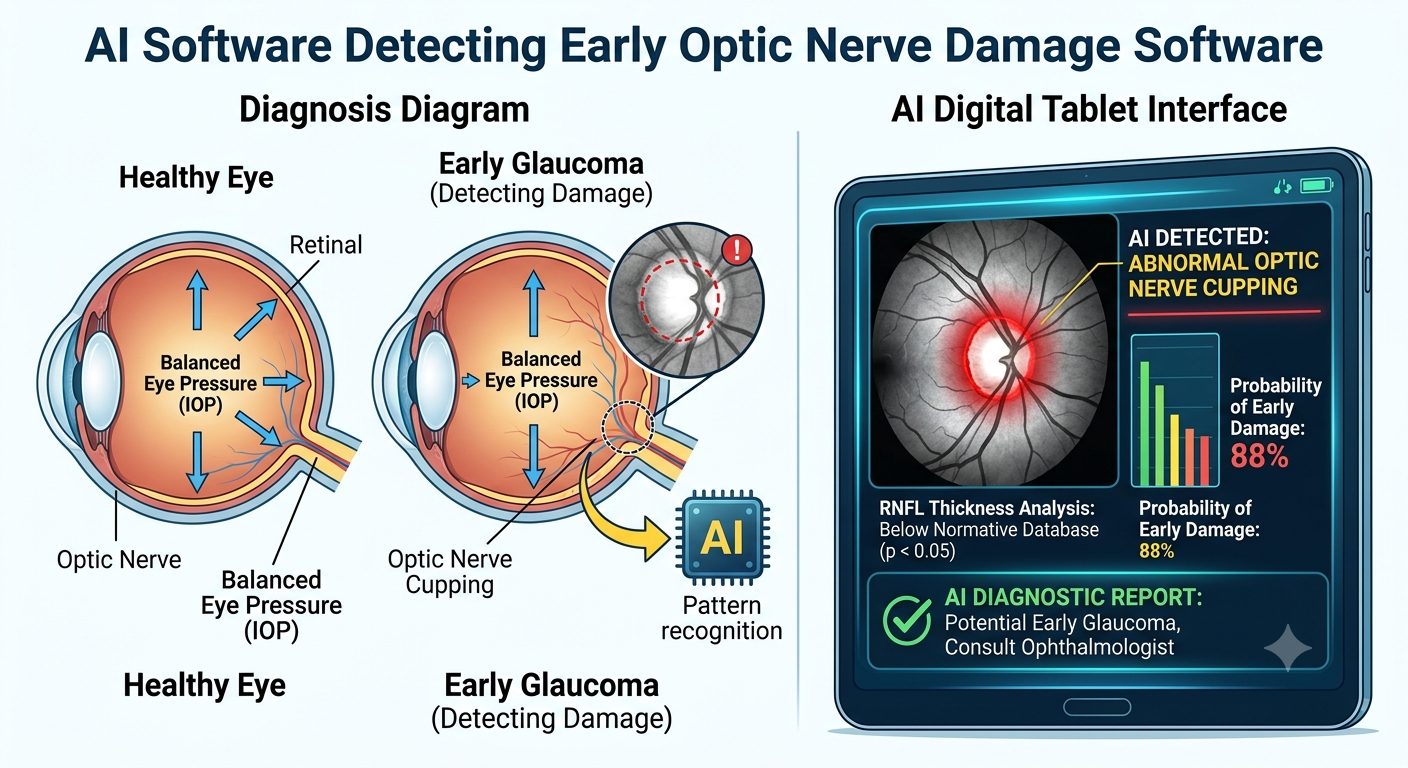
Dr. Patrick-Ferife said “by placing handheld digital imaging devices and AI-powered diagnostic software in village clinics, community nurses can scan a patient’s eyes in seconds, allowing doctors in city hospitals to review the images remotely through tele-ophthalmology.”
She, however, emphasised that technology must complement rather than replace human medical expertise.
”How do we use technology to improve eye care without losing the human being at the centre of care?” she asked, stressing that federal, state, and local governments must address severe infrastructure bottlenecks, secure patient health data, and lower internet access costs so that digital eye care remains affordable for ordinary citizens.
The society is also calling on the Federal Ministry of Health to integrate national eye-health data into the District Health Information Software (DHIS2) platform and add essential eye medications to the National Health Insurance Authority (NHIA) covered drugs list.