Biosafety expert reveals how Nigeria is rewriting its food safety narrative
By Onche Odeh
For years, the dinner tables and open-air markets of Nigeria have been quiet battlefields over the source and safety of commonly consumed foods.
This has been exacerbated by the advent of Genetically Modified Organisms (GMOs). Proponents of Genetic Modification, a process whereby the DNA of a plant, animal, or microorganism is altered using biotechnology. Scientific explanations say this process allows scientists to introduce, enhance, or remove specific genes to achieve desired traits like disease resistance, higher nutritional value, or medical treatments.
The conversation around GMOs is often driven by the cacophony of opinions by activists opposed to the technology on one side and deeply anxious consumers on the other.
However, skeptics have expressed dissenting views in several narratives that have raised suspicion and fears. They have stated in various articulated campaigns that, with GMOs, profit-driven foreign bodies would override local interests, ruin native soil, and quietly bypass regulatory watchdogs to slip unverified crops into the plates of ordinary citizens.
But on the ground, experts in Biosafety and similar fields have said the reality is far more human and actively guarded in safety.
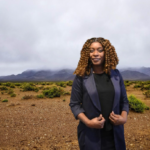
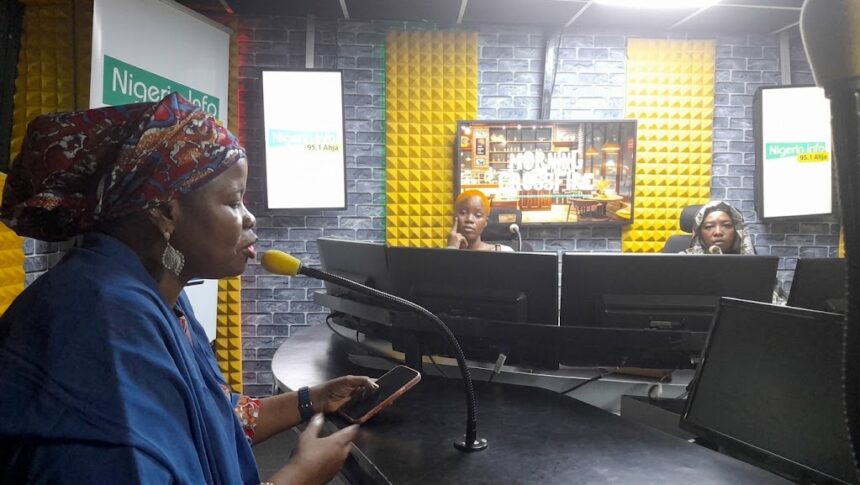
In a revealing radio interview, Mrs. Hauwa Tahir Ahmed, Director of Biosafety Enforcement and Operations at the National Biosafety Management Agency (NBMA), shattered the myth that Nigeria’s food supply is vulnerable to corporate maneuvering. The ultimate defense of the nation’s food, she explained, is not found in in a shared human reality ande not in any distant policy documents.
“One thing I’m assuring Nigerians is that we all go to the same market,” Mrs. Ahmed emphasized warmly.
“As a staff member of the NBMA, if I go to the market, I cannot identify which one is GM and which one is non-GM because they look the same. And if I cannot identify that in the market, remember I have my relatives in the village. I have my children, and they go out there to eat.”
This deep personal stake is what fuels the agency’s uncompromising stance. Armed with the sweeping legal teeth of the NBMA Act of 2015, these regulators operate with total institutional independence.
Sealing the Backdoors
Public anxiety often stems from a historical distrust of porous borders, where counterfeit items occasionally slip past official channels. Many assume GMOs follow that same predictable, back-alley trajectory.
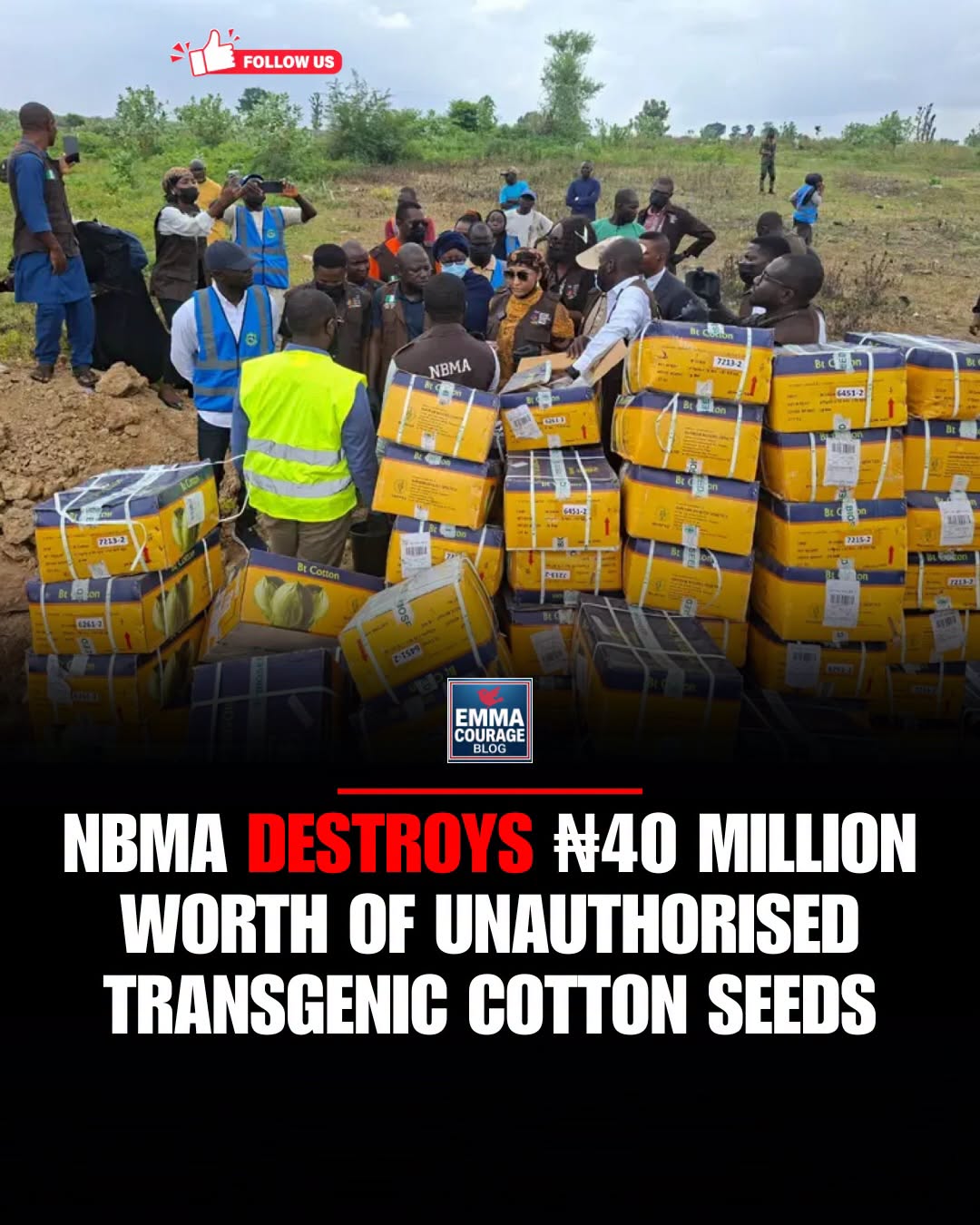
But Mrs. Ahmed made it clear that the NBMA does not sit passively at a desk waiting for compliance. Backed by the 2015 Act, the agency has the power to seize illicit products, shut down non-compliant facilities, and execute arrests. Through a web of over 10 critical institutional partnerships, including the Nigeria Customs Service, NAFDAC, and the Nigeria Agricultural Quarantine Service (NAQS), the agency acts as an invisible, high-tech wall at major ports of entry.
The defense of Nigeria’s food supply materialized definitively the day an unauthorized cargo vessel steamed out of the Atlantic and neared a Nigerian port. It arrived carrying a massive shipment of agricultural grains originating from Argentina, but its manifest lacked the mandatory biosafety clearances required by Nigerian law.
Instead of slipping quietly through the harbor, the ship’s arrival immediately triggered a silent alarm. The seamless defense was made possible by a strict Memorandum of Understanding (MoU) between the NBMA and the Nigeria Customs Service. Recognizing that the shipment contained a crop variety with a known genetically modified counterpart, Customs officials intercepted the vessel at the port of entry and instantly alerted biosafety regulators.
A rapid response team of NBMA scientists boarded the vessel to halt any potential offloading. They pulled physical samples directly from the ship’s cargo holds, rushing them back to the agency’s certified laboratories for genetic analysis. Under the microscope, laboratory testing confirmed that the grain contained genetic traits that had never undergone Nigeria’s vetting process.
Armed with the sweeping enforcement powers of the NBMA Act, regulators did not hesitate. The agency formally blocked the shipment from touching Nigerian soil, denied the vessel customs clearance, and ordered the entire ship to be turned away and repatriated back across the ocean to South America.
When asked on how a local agency resists the sheer financial gravity of global agricultural titans, Mrs. Ahmed said, “We are not influenced by any. We are a government-established agency. We work for the government. We don’t work for any international bodies. We are an entity and we work for the Nigerian government. We are here to protect the lives of Nigerians. The National Biosafety Management Agency has the powers to arrest and do that for violations.”
How Local GM Crops Earn Their Approvals
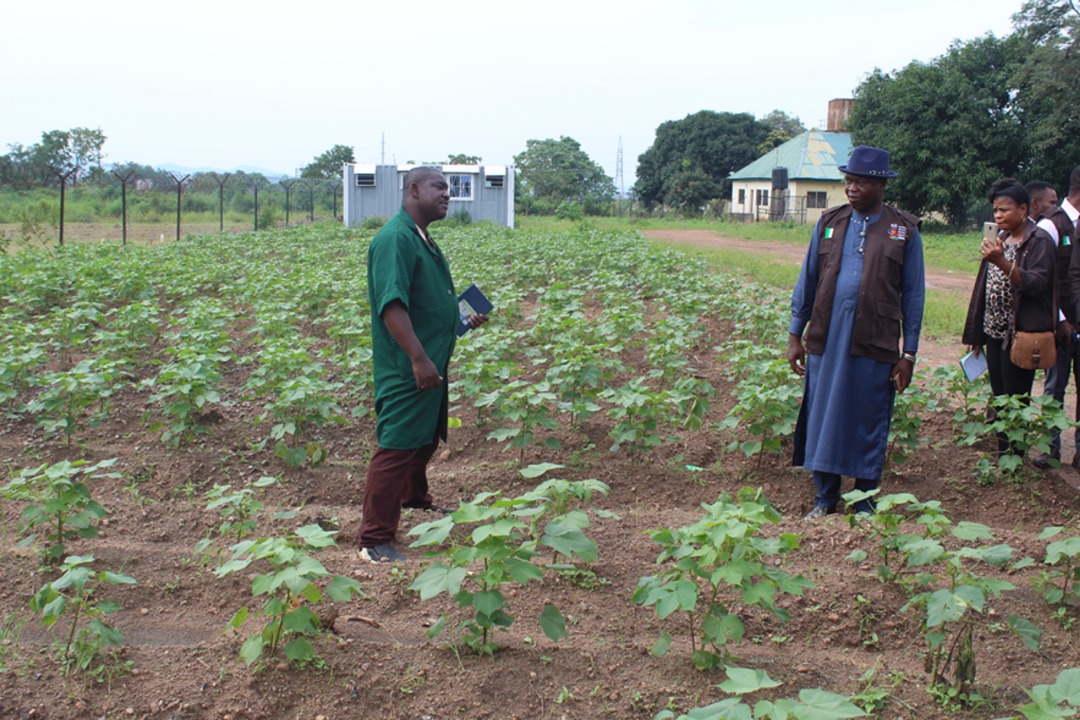
The persistent whisper that foreign companies can simply land a batch of GM seeds at a Nigerian port and distribute them to unsuspecting farmers is fundamentally false. For a genetically modified crop to be cultivated on Nigerian soil, it must survive an exhausting, multi-stage scientific gauntlet that takes nothing less than 12 to 13 years before an application dossier ever reaches a final committee table.
Chronicling this meticulous path to commercialization, Mrs. Ahmed detailed a procedural sequence designed to catch errors long before a seed ever touches an open, public field thus:
“The foundation of the process begins with strict institutional vetting. “First, any institution that wants to go into activities of modern biotechnology, you apply to NBMA. We go and check your lab to make sure that everything that you need to go into that activity is set. We accredited the institution first, then we certify the lab before you start any activity.
“From the lab, it goes to the field. Not just the normal field, it’s confined. Still, we have to go there to check that that field is confined, everything is done properly,” Ahmed stated.”
Continuing, she said, “From the confined field, there is what we call the multi-location trial. You go and test the crop in maybe three different geopolitical zones to see where that crop stands very well, before you finally apply to the NBMA.”
This process, accroding to her, precedes the next which involves safety audit of the crop in question.
“Once an institutional application is acknowledged within 21 days, internal review begins. We have a checklist that we do to be sure that a dossier contains all what we are looking for. And during that audit, if we find out that we need additional information, we stop the clock and write to the applicant to provide that information,” Mrs Ahmed said.
Meanwhile, the public is also involved in the process, as transparency belongs to them, not just the scientists.
According to the NBMA official, public engagement is treated as a non-negotiable step. “We do a public notice. And the public notice is done by publishing the application in three newspapers, two national newspapers and one local newspaper, for public input, for the public out there to know that there is an application before the agency. That publication will be out there for 21 days.”
The final evaluation, according to her, is handed over to an independent jury, consisting of the National Biosafety Committee and Technical Subcommittee, comprised of independent scientists, academia, NAFDAC, and Customs.
“That committee is ad hoc because we invite experts on that particular crop… Their recommendation is given to the agency. The agency will go back, sit down, and review the recommendation… before taking its decision,” she disclosed.
At its heart, the anxiety surrounding GMOs is driven by deep human concerns on whether GMOs will alter human DNA, cause new, strange allergies or ruin the soil.
Mrs. Ahmed directly addressed these fears by anchoring the agency’s work in global scientific consensus, referencing standards set by the Codex Alimentarius Commission (jointly operated by the FAO and WHO) and the Cartena Protocol on Biosafety, which Nigeria signed in 2000 and fully activated by 2003.
According to her, “Global scientific bodies approve that GM foods are as safe as conventional foods,” Mrs. Ahmed stated firmly. “For any GM food that is on the market, it’s as safe as the conventional food. It doesn’t alter the human DNA. During the process of modification, we look out for the allergenicity, the toxicity, and how the amino acids digest in our system.”
Ultimately, the strongest assurance provided by the NBMA is not found in a textbook or a legal document. It is found in the shared reality of the regulators themselves, who look at substantial equivalence to ensure modified crops match conventional ones.
To protect Nigerian families, the agency recognizes it must protect its own. Moving forward, the NBMA has finalized collaborative meetings with NAFDAC to implement a strict labeling regime. Very soon, clear labeling guidelines will be deployed across ordinary, everyday Nigerian markets. This will ensure absolute consumer choice at the market stands, reinforcing that anything stamped with the NBMA’s approval is unequivocally safe for humans, animals, and the environment.