

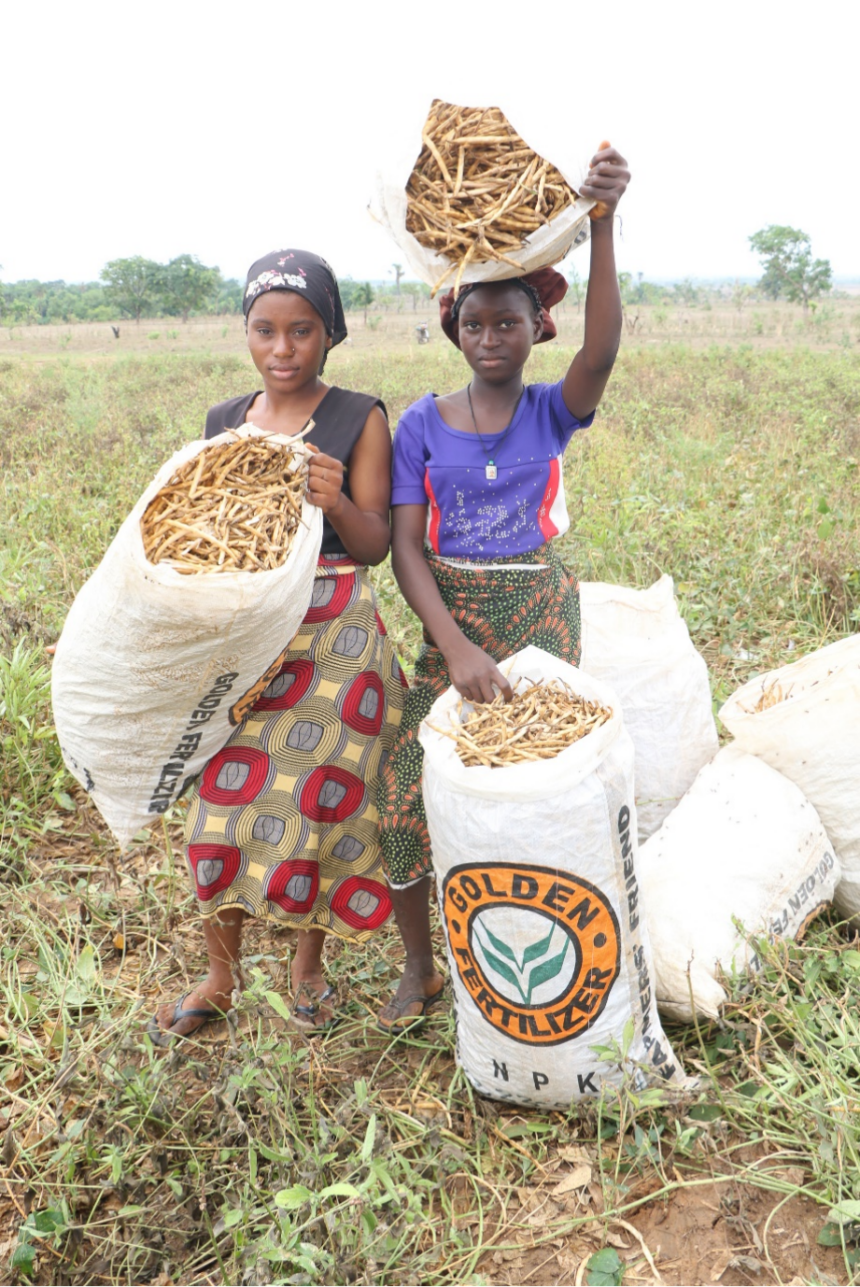
Nigeria and Ghana have been earmarked as the initial beneficiaries of a new major partnership launched by the African Agricultural Technology Foundation (AATF) to accelerate the development and adoption of improved cowpea varieties across West Africa.
The initiative, titled “Scaling up release of pod borer-resistant cowpea varieties and associated improved agronomic practices in Ghana and Nigeria,” aims to make the two countries major hubs of the highly consumed food crop by bringing together leading international and national research institutions to tackle persistent production challenges facing millions of smallholder farmers.
Making this disclosure at the project’s introductory launch, Dr Roy Mugiira, AATF Senior Manager, Product Development, said the project is supported by the Australian Centre for International Agricultural Research under the AAPCRA partnership, with technical backing from Australia’s national science agency, Commonwealth Scientific and Industrial Research Organisation. National implementation will be driven by key research institutions including the Institute for Agricultural Research in Nigeria and the CSIR-Savanna Agricultural Research Institute in Ghana.
The new 2-year project would focus on strengthening seed systems, releasing new locally adapted varieties, and improving agronomic practices to boost productivity. The initiative aims to increase yields from current averages of 700-800 kilograms per hectare to over one tonne per hectare through improved soil fertility management, integrated pest control, and the use of rhizobium inoculants.
Field implementation will include extensive on-farm trials across 40 sites in Ghana and Nigeria respectively, alongside efforts to scale certified seed production and streamline commercialization pathways.
Beyond productivity gains, the project places strong emphasis on inclusion. Women and youth are expected to make up at least 30 percent of participants in outgrower schemes and field trials, with dedicated support for women-led seed enterprises and targeted engagement strategies to enhance adoption.
The initiative also includes economic and cost-benefit analyses to strengthen the evidence base for decision-making, particularly in Nigeria, as well as the development of a business model framework to guide large-scale deployment of PBRC technologies.
Speaking on the relevance of the project, Dr Roy Murgiira noted that “Cowpea, a staple crop for over 200 million people in Sub-Saharan Africa, has long suffered devastating losses from the pod borer pest (Maruca vitrata), which can destroy up to 80 percent of yields. However, the introduction of pod borer-resistant cowpea (PBRC) varieties is beginning to reverse this trend.”
The project lead at AATF, Dr Jean Baptiste Tignegre, said Nigeria recorded a major milestone with the release of SAMPEA 20-T in 2019, while Ghana followed with Songotra-T in 2024. Adoption has steadily grown, with certified seed production in Nigeria rising from just 7 tonnes in 2021 to nearly 1,305 tonnes by 2025. The number of seed companies participating has also increased from 12 to 21 over the same period in Nigeria.
Ms Ritchie Zita, a representative of the Australian Centre for International Agricultural Research (ACIAR), expressed enthusiasm for the new PBR cowpea project and stated that it will help enhance the climate resilience of smallholder farmers in Africa.
She noted that the initiative on pod-borer-resistant builds on several years of research on pod-borer-resistant cowpea and aims to strengthen seed systems and expand adoption in Ghana and Nigeria.
The project Principal Investigators, Dr Mohammed Isiyaku and Dr jerry Nbune, from the Institute for Agricultural Research (IAR), Zaria, Nigeria, and Savanna Agricultural Research Institute, Tamale, Ghana, respectively said the success of the programme will depend on strong coordination among research institutions, seed companies, and development partners, as well as effective data management to support regulatory approvals and variety release processes.