

How Strategic Awareness Creation on Biotech Crops is Helping Northern Nigerian Farmers Fight Pests, Conquer Climate Change
By Onche Odeh
For decades, smallholder farmers across Northern Nigeria have waged an uphill battle against nature. From the devastating onslaught of Fall Armyworms and stem borers to the increasingly unpredictable droughts triggered by a changing climate, traditional maize cultivation was a high-risk gamble.
However, a quiet agricultural revolution taking root in Kano and other northern Nigerian states may have handed farmers the right tool to reverse the trend. Through targeted, grassroot educational campaigns led by the African Agricultural Technology Foundation (AATF), in collaboration with partners like Mastrotun Global Agro Allied Limited, the farmers are being aggressively equipped with the technical know-how to maximize TELA maize, a cutting-edge, Genetically Modified (GM), climate-smart hybrid crop that is helping them to move from guesswork to precision.
In the agrarian communities of Dawakin Tofa and Bunkure, farming is transitioning from reliance on legacy habits to data-driven business practices.
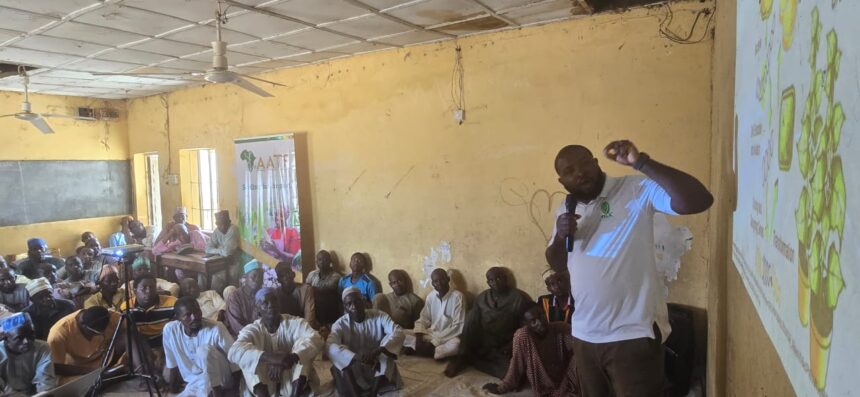
During back-to-back community sensitisation programmes, AATF’s Hybrid Seed Market Development Manager, Mr. Olawale Ojo, delivered a clear message to hundreds of gathered farmers, stressing that “Farming is a Big business,” adding that “the more farmers reduce avoidable costs while increasing productivity, the more profitable their farms become.”
To achieve this, the awareness creation and sensitization sessions moved beyond theory into rigorous, practical agronomic instruction. Local extension agents, such as Malam Bashir in Dawakin Tofa, helped orchestrate interactive learning tracks where farmers were explicitly sensitized and made aware of precise cultivation standards.
This specific awareness creation and sensitization directly addresses resource waste.
Laima Bashir, a female farmer advocate, observed that many women involved in maize production historically lacked access to proper planting techniques. This, she said is important as they have been consistently sensitized and made aware of correct seed spacing and precision hole-placement, two essential elements for improving productivity while reducing the waste of costly seeds and inputs.
A major hurdle for biotechnology adoption in rural Africa is misinformation.
In Dawakin Tofa, Mr. Ojo directly confronted some of the widespread rumours, reassuring anxious communities that claims suggesting GM seeds cause cancer or ruin soil fertility are entirely false.
He emphasised that TELA maize has undergone rigorous, multi-level safety assessments and is fully certified as safe for humans and the environment.
To drive the point home, AATF utilises comparative visual education during the awareness creation and sensitization sessions. By displaying side-by-side images of farms planted with TELA maize against conventional varieties, farmers are able to see the difference. The TELA fields were universally recognized by the participants as healthier, more uniform, and noticeably more vigorous.
During the awareness creation and sensitization sessions, Ojo introduced the improved TELA maize hybrids, which are SAMMAZ 72T, SAMMAZ 73T, SAMMAZ 74T and SAMMAZ 75T, and sensitized and made farmers aware of recommended agronomic practices, including the 25cm by 75cm planting spacing and the “one seed per hole” technique to ensure healthy crop establishment and optimal yields.
To demonstrate the technology’s impact, Ojo revisited last season’s improved cowpea programme and invited farmers to share their experiences.
From Fewer Sprays to Bigger Profits: Real Testimonies:
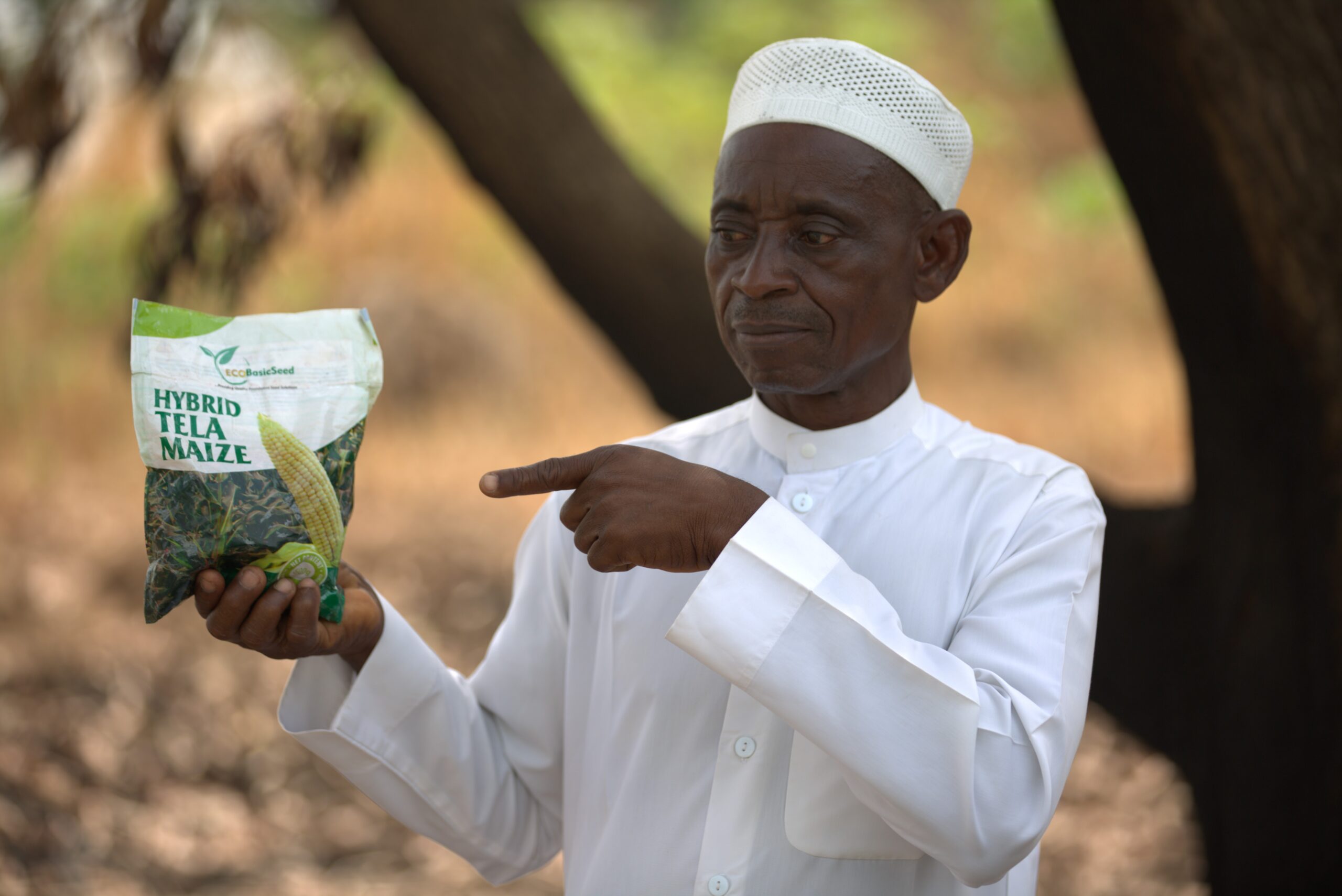
The testimonies arising from these awareness creation and sensitization efforts paint a compelling picture of how improved seed technologies are already transforming livelihoods.
The economic implications of this awareness creation and sensitization and seed rollout are massive, particularly regarding the reduction of expensive chemical applications. Farmers who previously sampled similar improved biotechnology through Mastrotun Global shared striking testimonies.
Malam Idris Ado recalled how he used to spray insecticides up to ten times a season on conventional crops. With improved seeds, he cut spraying down to just twice, drastically lowering production costs while harvesting a far stronger, more vigorous yield.
Malam Ubale Lawan reported an identical drop in overhead, watching his necessary chemical applications plunge from five sprays to just two.
Maryam Adamu spoke on the social impact, noting that built-in insect protection significantly eases the grueling physical labor and financial burden on women and smallholders who frequently struggle to afford repeated pesticide applications.
Even seasoned veterans are finding themselves humbled by the depth of the awareness creation and sensitization. Malam Magaji Usman, who has farmed for nearly 45 years, described the extension program as a complete eye-opener.
“Despite decades of farming experience, I have never received such specialized awareness creation and sensitization. I highly encourage my fellow farmers to adopt TELA maize so they can step into better crop performance,” Malam Usman said.
Next Chapter Driven by Community Leadership
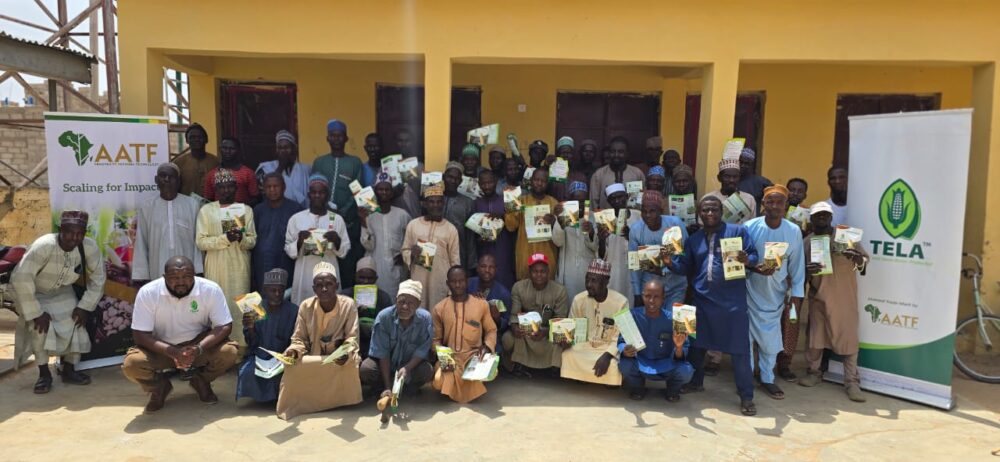
The transition to GM climate-smart agriculture is receiving unwavering support from Northern Nigeria’s traditional institutions. In Bunkure, local leaders like Malam Garba Dantale and the Mai Unguwa, Umaru Ali, publicly commended the initiative, urging their people to shed outdated methodologies and embrace modern agricultural science.
The District Head of Bunkure closed the session with a resonant affirmation.
He said, “The world is changing. Farmers must improve their methods if they want to continue succeeding.”
To ensure this knowledge transforms into immediate action, the programs concluded with the distribution of sample packs of TELA maize seeds for trial planting.
Backed by ongoing technical support from AATF and licensed seed companies, Northern Nigerian farmers are no longer just reacting to climate change and pest invasions. They are actively being sensitized and made aware of how to conquer them.