By Franklyn Alozie
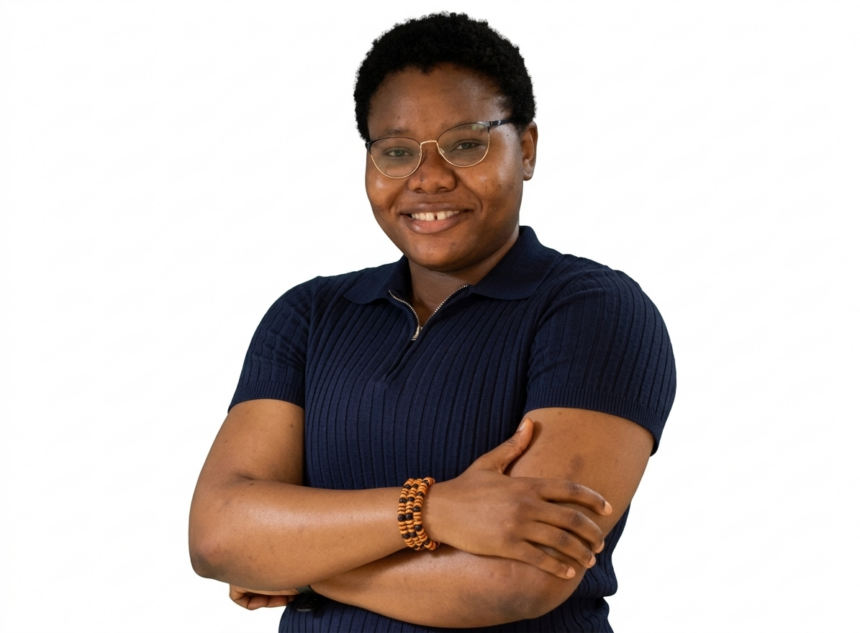
Computer scientist and artificial intelligence researcher Mary-Brenda Akoda has won the 2026 Nigeria Prize for Science and Innovation (NPSI) for developing a groundbreaking AI technology capable of reducing Magnetic Resonance Imaging (MRI) scan times by up to 90 per cent.
The Nigeria LNG Limited (NLNG)-sponsored prize board announced Akoda as the unanimous winner for her software innovation, GenScan AI.
Speaking in Lagos during the official press conference for the award, Chairman of the NPSI Advisory Board, Professor Barth Nnaji, said the technology offers a direct mathematical solution to one of healthcare’s most pressing equipment bottlenecks.
Over 200 million Nigerians currently rely on fewer than 100 functional MRI machines nationwide, creating severe diagnostic backlogs for patients suffering from strokes, spinal injuries, and neurological conditions.
Millions of citizens suffer needlessly from delayed medical interventions that faster, accurate imaging could catch and resolve before permanent organ damage sets in.
Yet over 80 percent of diagnostic waiting times are driven simply by the slow physical acquisition speed of traditional MRI scanners.
Among public hospitals in Nigeria, a single brain or spine MRI scan can take between 20 to 45 minutes per patient, a constraint that limits daily scanner capacity to just a handful of cases.
With diagnostic machines scarce and expensive to import, patients in rural and urban communities alike are often left waiting weeks for critical scans.
The award board, therefore, highlights the adoption of AI-driven image reconstruction as a direct way to bridge this gap.
Professor Nnaji stated that “by employing a single-step consistency-model framework known as C-MORE, the software reconstructs clear, high-resolution diagnostic images from far less acquired data, meaning a 20-minute scan can effectively be completed in two minutes.”
He, however, emphasized that software innovations must complement existing medical protocols rather than replace rigorous clinical judgment.
Professor Nnaji enjoined health administrators and government institutions to integrate such software into existing hospital hardware so that advanced medical imaging becomes accessible and affordable for ordinary citizens.
The prize administrators are also calling on federal health authorities and hospital boards to accelerate clinical validation and adopt indigenous AI technologies across public tertiary health institutions nationwide.
Akoda who hails from Calabar South Local Government Area of Cross River State, becomes the first millennial and first woman to win the Prize as an individual recipient, marking a significant milestone in the Prize’s history.